
COVID-19 testing can help determine whether someone has an active infection or has developed antibodies after an infection. PCR testing looks for genetic material from the virus, while antibody testing uses a blood sample to detect the body’s immune response. The timing of testing can affect results, and the information provided by each type of test is different. Families with questions about COVID-19 symptoms or testing should talk with their pediatrician about the most appropriate next steps.
There’s a lot of information out there – and it’s changing all the time. Dr. Joanna Sexter helps to explain the tests currently available and what the results mean.
We know that everyone wants answers in this pandemic. Some answers are easy. YES, you should wear a mask. NO, you can’t have a party. The harder answers to obtain surround the novel Coronaviru
s and available testing.
Here, we will try to provide some answers regarding the current testing.
There are 2 types of testing that people are hearingabout in the news.
1) A PCR (DNA-based) test which is a nasal or throat swab, or both.
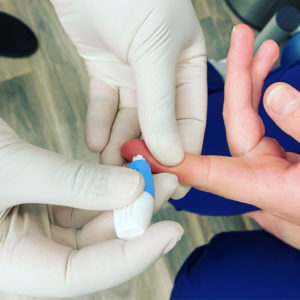
2) An antibody test, which uses a small sample of blood from a finger prick.
Let’s discuss both.
The PCR test is the one that has been around for a few weeks. This test result can be obtained in as little as an hour (for hospitalized patients) or up to several days (for drive-up and office visits). The specimens at most drive-up and office settings like ours are sent to a lab, which may then send them to another branch of the lab, which then puts those specimens in a queue to be analyzed. These tests are very sensitive, meaning that if you have symptoms and you truly have COVID-19 then the test should be positive. There is not enough data out there that tells us how sensitive this test is if a person has no symptoms. Also, we don’t know how long this test would show up as positive once your COVID-19 symptoms have resolved.
The second test, which is getting a lot of press lately, is the serology (or antibody) test. This is newer and not yet widely available, although some offices in the DC area have begun to use it. This test uses a small sample of blood taken from a finger prick. The results are obtained in 15 minutes. Theoretically, this test is looking to see if your body has developed antibodies to the novel coronavirus (knows as Sars-CoV-2) which causes COVID-19. The hope is that if someone develops antibodies then they would be immune and never be able to get it again (just like with chickenpox). Unfortunately, this test has many problems associated with it, which will likely be resolved in time as better tests become available.
Here are the problems.
1) This antibody test (along with the PCR test) was rushed through the approval process and there is no published data showing how accurate the test is.
2) This test can confuse the antibody from the COVID-19 Coronavirus with one of many other Coronaviruses that cause the common cold. This means that people could be told they have antibodies to the pandemic COVID-19 Coronavirus when they really don’t. People might think they are immune when they are not.
3) Even if someone is found to have antibodies to COVID-19, there simply is no data to prove that having antibodies means you are immune and won’t get it again. Note the recent cases in South Korea of 91 people who had COVID-19 and are now re-infected with it again.
4) We know that it can take 12-14 days after symptoms develop for a body to even produce antibodies. Early testing can decrease the accuracy of results.
Therefore, we just don’t know at this point if using the current antibody tests that are on the market will provide any useful information. So, we must wait to visit grandparents and friends until we have better testing.
At Spring Valley Pediatrics we only want to give our patients the best evidence-based care in the Washington DC metropolitan area. We will continue to follow the guidance from the experts at the CDC, Johns Hopkins Health System, and Children’s Hospital who do not recommend doing the current antibody test. At this time we will do the PCR test when warranted by the clinical situation and while we have a supply of the necessary test kits. We will not be doing the antibody test until there is more data available and we are confident that the test results will provide meaningful information for our patients.
Frequently Asked Questions
What is a COVID-19 PCR test?
A PCR test looks for genetic material from the virus that causes COVID-19. The article describes PCR testing using a nasal or throat swab and explains that samples may be sent to a laboratory for analysis.
What is a COVID-19 antibody test?
An antibody, or serology, test looks for antibodies produced by the immune system in response to an infection. The test discussed in the article uses a small blood sample rather than a nasal or throat swab.
What is the difference between a PCR test and an antibody test?
PCR testing is designed to detect evidence of the virus itself and can help identify an active infection. Antibody testing looks for the immune response that can develop after infection, so the two tests provide different types of information.
Can an antibody test tell if I currently have COVID-19?
Antibody testing is not designed to be the primary way to diagnose a current COVID-19 infection. Antibodies take time to develop, so testing too early after infection can affect the usefulness of the result.
How soon do COVID-19 antibodies develop?
The original article notes that antibodies may take time to develop after symptoms begin. Because immune responses vary and testing guidance has evolved since this article was published, families should follow current medical recommendations when interpreting antibody test results.

