
How to Introduce Peanuts to Your Baby: AAP Guidelines
The American Academy of Pediatrics now recommends introducing peanut-containing foods to most babies between 4 and 6 months of age — much earlier than previously advised — to significantly reduce the risk of developing a peanut allergy. For most babies with no eczema or existing food allergies, you can introduce peanuts at home using smooth peanut butter thinned into a puree. Babies with severe eczema or an existing egg allergy should be evaluated by their pediatrician first. Call Spring Valley Pediatrics at 202-966-5000 with any questions.
Why Early Peanut Introduction Matters
 For decades, parents were told to avoid giving peanuts to babies. That guidance has been completely reversed. The landmark LEAP study (Learning Early About Peanut Allergy) published in 2015 demonstrated that introducing peanut-containing foods early — in the first year of life — reduced peanut allergy rates by up to 80% in high-risk infants compared to avoidance.
In 2017, the National Institute of Allergy and Infectious Diseases issued updated guidelines recommending early peanut introduction for most infants. The AAP now fully supports this approach. Early, consistent exposure teaches the immune system to tolerate peanut protein rather than react to it.
Three Categories of Risk — What to Do
Category 1: Severe Eczema or Existing Egg Allergy (High Risk)
These infants are at the highest risk for peanut allergy and should be evaluated before home introduction. Your Spring Valley Pediatrics physician may recommend allergy testing (specific IgE blood test or skin prick test) or a supervised peanut introduction at the office or with a pediatric allergist. Introduction for high-risk infants should happen as early as 4–6 months, after evaluation.
Category 2: Mild to Moderate Eczema (Moderate Risk)
Babies with mild or moderate eczema can generally introduce peanuts at home around 6 months of age, after starting other solid foods. Speak with your Spring Valley Pediatrics physician at the 4-month visit — they can help you determine whether at-home introduction is appropriate and how to do it.
Category 3: No Eczema, No Food Allergies (Low Risk)
The majority of babies fall into this category. You can introduce peanut-containing foods freely at home starting around 4–6 months, when other solids are introduced. No special testing or physician supervision is required beforehand.
Want a quick-reference handout on introducing peanuts to your baby?
Download our Introducing Peanuts to Babies PDF →
How to Safely Introduce Peanuts at Home
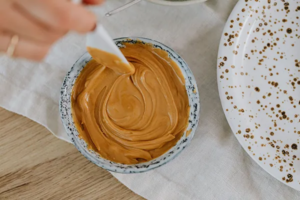 Never give whole peanuts, peanut chunks, or a spoonful of peanut butter to a baby — these are serious choking hazards. Instead, use one of these safe methods:
- Smooth peanut butter thinned with breast milk, formula, or warm water — start with ¼ teaspoon mixed into a puree of fruit or vegetable your baby already tolerates.
- Peanut puff snacks that dissolve easily (such as Bamba peanut snacks) — these are popular in Israel, where peanut allergy rates are very low, and are a safe, convenient option for babies who are eating finger foods.
- Smooth peanut butter stirred into oatmeal, yogurt (for babies over 6 months), or pureed sweet potato.
A few important steps before introducing:
- Choose a day when your baby is well — not sick or in an eczema flare.
- Introduce early in the day (not before bed) so you can watch your baby for 1–2 hours afterward.
- Do not introduce peanuts along with another new food — introduce peanuts on their own so any reaction can be clearly attributed.
- Start with a small amount and wait 10 minutes before giving more.
Signs of an Allergic Reaction
Mild local reactions (a small rash around the mouth or chin from skin contact with the food) are common and are not necessarily an allergic reaction — wipe the area clean and continue with a small amount.
Signs that may indicate a true allergic reaction include:
- Hives or a rash appearing on the body away from the mouth
- Swelling of the lips, tongue, or face
- Vomiting shortly after eating
- Difficulty breathing, coughing, or wheezing
- Extreme fussiness or appearing very unwell
If you see hives or vomiting together, or any difficulty breathing or facial swelling, call 911 immediately — this is a medical emergency. For milder reactions (hives only, no breathing symptoms), call Spring Valley Pediatrics at 202-966-5000 right away.
Once You’ve Started — Keep It Going
Early introduction only works if it is maintained. Studies show that protection comes from regular ongoing peanut exposure, not a single introduction. Once your baby has eaten peanuts without a reaction, continue offering peanut-containing foods 2–3 times per week consistently.
If you stop for a period (during illness, travel, etc.) and then try to reintroduce, the risk of a reaction may increase. Consistency is the key.
What If My Family Has a History of Peanut Allergy?
A peanut allergy in a parent, sibling, or other close family member does not automatically mean your baby will be allergic. Family history is not a contraindication to early introduction. However, it does increase risk — babies with a first-degree relative (parent or sibling) with a peanut allergy should be evaluated by their pediatrician before home introduction.
At Spring Valley Pediatrics, we assess each baby’s individual risk at their well-child visits. If Dr. Jeong’s allergy and immunology services are appropriate for your baby, we will make that referral directly — no separate practice to navigate.
Frequently Asked Questions
At what age should I introduce peanuts to my baby?
For low-risk babies (no significant eczema, no food allergies), between 4 and 6 months — when other solid foods are introduced. Do not wait beyond 6 months. Earlier introduction is associated with greater reduction in allergy risk.
What if my baby already has a peanut allergy — can I still use this approach?
If your baby has already been diagnosed with a peanut allergy, do not attempt at-home reintroduction. Speak with Spring Valley Pediatrics about a referral to our on-site allergist Dr. David Jeong, MD, who specializes in food allergy treatment including oral immunotherapy (OIT) protocols for peanut allergy.
Does this apply to other tree nut allergies?
The early introduction evidence is strongest for peanuts. For other tree nuts (cashews, almonds, walnuts, etc.), a similar approach of early introduction is reasonable for most babies, but there is less data specifically supporting it. Introduce one new food at a time so you can identify any reaction clearly.
Is this guidance different from what my parents were told?
Yes — significantly. Before 2017, guidelines recommended delaying peanut introduction until age 3 for high-risk babies. That guidance was based on a theory that proved incorrect. The LEAP study reversed decades of advice. What was considered protective (avoidance) was actually increasing allergy rates. The current guidelines represent a major and evidence-based shift.
My baby’s daycare says no peanuts. How does this work?
Many daycares and preschools are peanut-free environments. You can still achieve early peanut introduction at home during non-daycare hours. Introduce peanuts at home in the morning or evening and maintain regular exposure there. Contact Spring Valley Pediatrics if you need guidance on how to manage this.